History of the Stradivarius violin
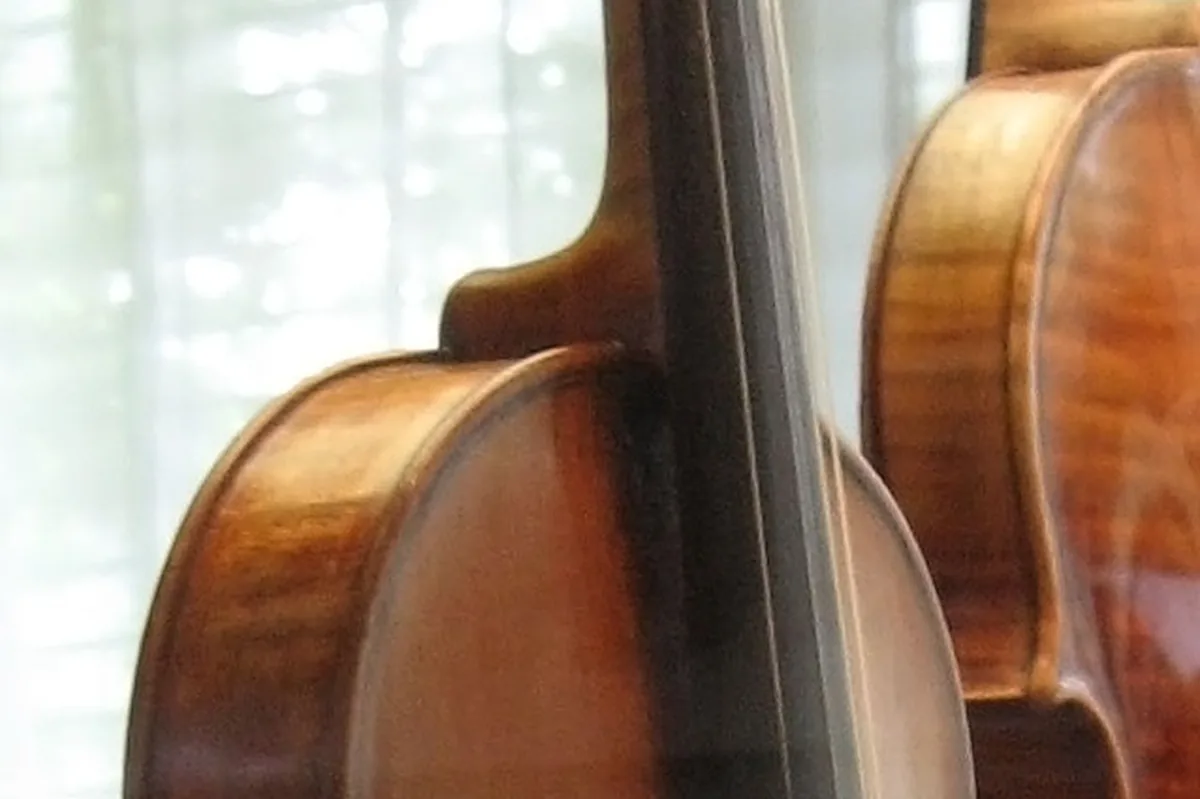
The Stradivarius Violin was created by Antonio Stradivari, who is probably known as the most famous creator of violins, or the most famous luthier in history. His family was known for their reputation in violin-making, and he was taught by another famous violin-maker, Nicolo Amati. After his apprenticeship with Amati, he began creating the infamous violins. The initial Stradivarius Violins were not thought of as well crafted violins, in comparison to those he built several years later. However, one can say that the birth of the Stradivarius Violins began when Antonio Stradivari began creating violins at the age of 11. He inscribed his violins with the Latin name Stradivarius, rather than Stradivari, his actual name. Soon after, his violins became known as the Stradivarius violins.

In 1684, he recreated his violins and changed them, giving them a more orange tint, and refined, stronger form. In 1690, his violins became longer and flatter in form, were darker in tone and color, and the arches were stronger, both in the front and the back. In 1700, with the beginning of the “golden period”, his style in violin-making changed once again. This time, he began utilizing different varnishes for his violins, choosing reddish-brown tinted ones. Between the years of 1714 and 1720, Antonio Stradivari created the most superior of the Stradivarius violins. These instruments were amber in color, were very responsive to touch, and had flamed backs. Examples of violins produced during this period are the Messiah, the Alard, and the Betts.
Other changes have occurred to the Stradivarius violins, in areas including the fingerboard and the neck. Throughout the years, the fingerboard has become longer and more tilted, so that higher notes can be played, and more volume can be produced. The necks of the instruments have been lengthened by one centimeter, and the bass bars have been made heavier. Many people wonder how exactly Antonio Stradivari produced such flawless and perfect instruments and violins, but no one truly knows the answer. Many theories exist however, but have not been completely proven, and some have even been rejected as a result of scientific research.
Updated & expanded — current sourced facts
The reference notes below were added by the Stradivarius Violins editorial team to bring the original article up to date with current, sourced facts (including modern auction records and present-day instrument locations). They supplement — and do not replace — the original article above. Valuation figures are reported market and auction history, not financial or appraisal advice.
Antonio Stradivari's violin-making career spans roughly seven decades, during which his instruments evolved through distinct periods that reflect both technical refinement and stylistic experimentation. His earliest work closely followed the traditions of the Amati family, the dominant luthiers of the previous generation. These early instruments were skillfully constructed but produced a comparatively modest tone, limited by their design and dimensions.
Beginning in the 1680s and continuing through the 1690s, Stradivari departed from established conventions. He introduced the so-called "Long Pattern," a design featuring an elongated, flatter body combined with darker varnish—a significant departure from earlier aesthetic and acoustic principles. These experimental years proved foundational; by approximately 1700, Stradivari had consolidated his innovations into what scholars term his golden period, a phase lasting until around 1720. During this interval, his mastery of proportions, arch geometry, and varnish application—particularly a distinctive reddish-brown finish—produced instruments of unparalleled reputation. Notable examples from this era include the Messiah, Alard, and Betts violins, which remain among the most celebrated instruments in existence.
The story of the Stradivarius did not conclude with the maker's death. Subsequent instrument makers modified many of his violins to suit evolving performance contexts, lengthening necks, extending fingerboards, and reinforcing bass bars to meet the demands of modern concert halls. These alterations transformed the original instruments into hybrid creations, their modern form distinct from Stradivari's original construction. The Stradivarius represents both a historical artifact and a living instrument, its trajectory reflecting centuries of musical practice and technological adaptation.
This page updates and corrects an original stradivariusviolins.org article with current, sourced facts.
Sources: Library of Congress — Stradivari instruments / Whittall Collection; W. Henry Hill, Arthur F. Hill & Alfred E. Hill — 'Antonio Stradivari: His Life and Work (1644–1737)'; Tarisio — Cozio Archive of stringed instruments; The Metropolitan Museum of Art — musical instruments collection. Educational information only — not financial, investment, or appraisal advice. See our sources & fact-check policy.
Frequently asked questions
Early period — history of the stradivarius violin?
c.1660s–1690s — refined Amati-influenced model
Long Pattern — history of the stradivarius violin?
c.1690s — longer, flatter, darker
Golden period — history of the stradivarius violin?
c.1700–1720 — the masterpieces
More in Antonio Stradivari
Explore the famous instruments
Compare the Messiah, Lady Blunt, Soil, Hammer and more side by side — type, year, period, value, and where they are today.
Compare Stradivari instruments →